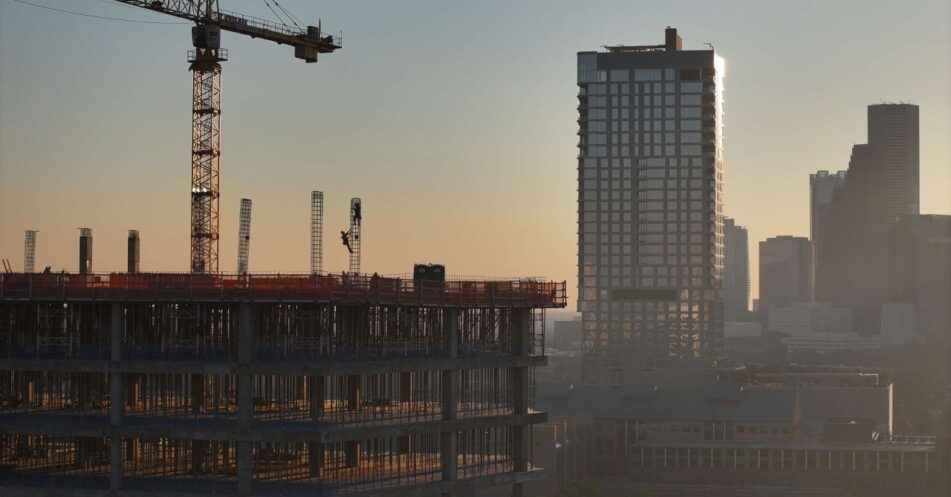
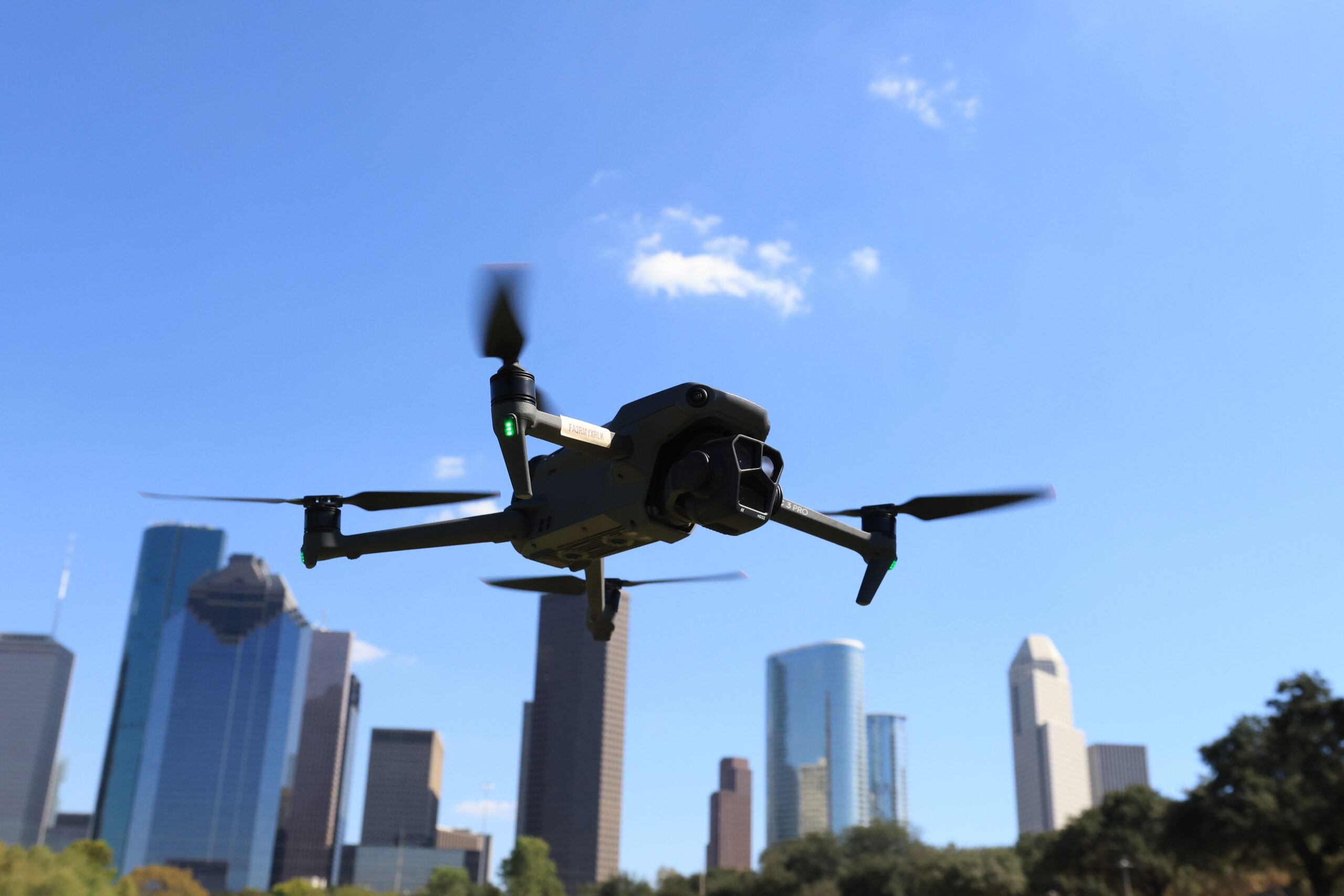


Arch Aerial Houston Construction Skyline

JUL 27 2026How Aerial Data Is Changing Pre-Bid Construction

Two years ago, a fly-through of planned construction in a pre-bid package was a differentiator. Today, it’s becoming an expectation. The general contractors winning competitive commercial bids in 2026 aren’t just submitting stronger numbers, they’re submitting stronger presentations, and aerial documentation is a growing part of how that presentation gets built.

Here’s what’s actually changing in how construction projects get sold, and what a modern pre-bid documentation stack includes.

What Used to Be Enough in a Pre-Bid Package

For most of the last decade, a commercial construction pre-bid package leaned on renderings, a written scope of work, and references. Renderings communicated vision. References communicated trust. Neither communicated what the finished project or the build process would actually look like in motion.

That was enough when every competing bid looked roughly the same. It stopped being enough once some GCs started including aerial media and others didn’t.

What’s Now Expected

Three additions have moved from differentiator to expectation in commercial pre-bid materials:

Fly-throughs of planned construction. A virtual walk-through of the site or the planned build, giving decision-makers a spatial sense of the project before it exists.

Pre-site aerials. Current-condition aerial footage of the site itself, establishing the baseline before any ground is broken.

Progress documentation concepts. A proposed cadence for how the project will be visually documented once construction begins, phase-by-phase aerials and fixed-point time-lapse, so the client knows what visibility they’ll have throughout the build.

Why this shift is happening now 

The driver isn’t really about drones. It’s about who else is competing for a client’s attention and capital. GCs aren’t just competing against each other anymore; they’re competing against the general standard of visual communication clients see everywhere else, from developer pitch decks to architecture firm reels.

A written proposal next to a competitor’s fly-through reads as less prepared, even if the underlying construction plan is identical. That’s an uncomfortable but real dynamic, and it’s why the shift has moved quickly once it started.

The strongest version of this isn’t just a fly-through concept for the pitch. It’s a documentation plan that carries through the entire project:


What a Full Pre-Bid to Post-Build Documentation Stack Includes


  • Pre-construction: site aerials, planned-build visualization concepts
  • Groundbreaking: aerial capture of the ceremony and initial dirt work
  • Mid-construction: phase-by-phase progress aerials, fixed-point time-lapse
  • Near-completion: drone-on-drone footage, team-at-work documentation
  • Final: a complete before/after record and a finished-asset fly-through

The advantage of proposing this full stack at the pre-bid stage, rather than adding pieces of it later, is that it shows the client the GC has already thought through how the project will be documented and communicated across its full lifecycle, to their marketing team, their investors, and the city’s permitting or public record where relevant.

Who Uses the Documentation After the Bid Is Won


This media doesn’t serve one purpose. The same capture cycle typically feeds:

  • The General Contractors own marketing and portfolio material for the next bid
  • The client’s investor or board updates during construction
  • Community engagement and public communication, especially on visible urban projects
  • The permanent project record

That reuse is part of why the investment in a documentation stack pays back beyond the single project it was built for.

FAQ

Is a fly-through of planned construction the same as an architectural rendering?

No. A rendering is a static image. A fly-through is a navigable, motion-based visualization, often built from a combination of the actual site’s current aerial data and the planned design, giving a more grounded sense of scale and context than a rendering alone.

Does every commercial project need this level of documentation?

Not every project needs the full stack. Larger, more visible, or more competitively bid projects see the most benefit from investing in complete pre-bid to post-build documentation. Smaller or less competitive jobs may only need basic progress aerials.

Who typically commissions this documentation, the GC or the client?

It varies. Some GCs build documentation into their standard service offering and absorb it as a differentiator. Others include it as a line item the client can opt into. Increasingly, sophisticated clients are asking for it directly.

How far in advance of a bid should aerial pre-site work happen?

As early as the GC has site access, ideally as part of the initial site assessment. Early aerial capture also gives the documentation team a true baseline to build the before/after record from once construction starts.


Arch Aerial is building out pre-bid and full-lifecycle construction documentation for GCs across DFW and the broader Texas market. If your team is putting together a bid and wants to talk through what a documentation stack could look like, we’re happy to help you think it through.

Arch Aerial at Honeysuckle Oaks Vineyards

This month, we were invited to fly our multi-rotor UAVs at Honeysuckle Oaks Vineyards, a small winery outside of Cypress, TX.  The proprietor, Mr. Ken Wuensche, was an amazing host, and we

Arch Aerial Included in “A Distant Reading of the Day of Archaeology” by Dr. Ben Marwick

If you checked out our article on the 2013 Day of Archaeology website, you probably soon realized that there is an astonishing amount of information available through the combined efforts of

The Day of Archaeology

The Day of Archaeology is a project started in 2011, aimed at giving the public a look inside the world of archaeology and what an archaeologist does during a typical day of work.  Professi
AALLC_H2S_v2

Regulatory Compliance: Drone Data in Environmental Reporting

The oil and Gas industry is under constant pressure to reduce methane emissions, a potential greenhouse gas that contributes to climate change. In response, the U.S. Environmental Protection

Read More
facade

Construction Safety: Drone Use Can Save Lives and Money

With many facets of construction being high-risk, safety is notably the top priority for every project manager, contractor, and laborer. Large-scale and small developments alike must maintai
Read More
Arch AerialArch Aerial